iPhone 18 Pro vs iPhone 17 Pro: Same Size Outside, What Changed Inside (Official Specs Compared)
· By Xin Wang · 中文
iPhone 18 Pro has exactly the same height, width and depth as iPhone 17 Pro, so many people assume little changed. Put Apple's spec pages and press releases for the two generations side by side and the changes turn out to be where you cannot see them: cooling, chip packaging, battery life, charging and the main camera. This article uses only figures with a source, and lists separately the claims going around that Apple has not published.
Key findings
- Body: identical dimensions, more weight. Pro goes from 204 g to 211 g and Pro Max from 231 g to 249 g.
- Cooling: the vapor chamber has three times the surface area, and the chip now sits beside its memory and directly against the chamber. Apple says sustained performance is up to 40% higher.
- Performance: Geekbench 7 single-core 4017 vs 3167 and multi-core 11328 vs 8803, about 27% and 29% higher.
- Battery: video playback rises from 31 to 34 hours on Pro and from 37 to 43 hours on Pro Max.
- Charging: 50% now takes about 15 minutes instead of 20.
- Camera: the Main camera moves from a fixed ƒ/1.78 to a four-step variable aperture, ƒ/1.48 to ƒ/4.0.
- The differences in one table
- Body and weight
- Cooling and chip packaging
- Performance
- Battery life and charging
- Camera
- Modem and Dynamic Island
- Claims going around that Apple has not published
- Is it worth upgrading
- FAQ
The differences in one table
Figures come from Apple Malaysia's iPhone 18 Pro tech specs page, Apple Support's tech specs pages for iPhone 17 Pro and 17 Pro Max, and the two official press releases. Battery figures are for the version sold in Malaysia, which has a physical SIM tray.
| Item | iPhone 17 Pro / Pro Max | iPhone 18 Pro / Pro Max |
|---|---|---|
| Size (Pro) | 71.9 × 150.0 × 8.75 mm | 71.9 × 150.0 × 8.75 mm |
| Size (Pro Max) | 78.0 × 163.4 × 8.75 mm | 78.0 × 163.4 × 8.75 mm |
| Weight | 204 g / 231 g | 211 g / 249 g |
| Body | Aluminium unibody | Aluminium unibody |
| Colours | Silver, Cosmic Orange, Deep Blue | Black, Silver, Glacier, Burgundy |
| Storage | Pro up to 1TB, Pro Max up to 2TB | Both up to 2TB |
| Chip | A19 Pro, 6-core GPU, 16-core Neural Engine | A20 Pro (2 nm), 7-core GPU, Dual 16-core Neural Engine |
| Main camera aperture | ƒ/1.78, fixed | ƒ/1.48, ƒ/1.8, ƒ/2.8, ƒ/4.0, variable |
| Video playback | 31 hours / 37 hours | 34 hours / 43 hours |
| Streamed video playback | 28 hours / 33 hours | 31 hours / 38 hours |
| Wired fast charge | 50% in 20 minutes (40W adapter or higher) | 50% in about 15 minutes (60W adapter or higher) |
| MagSafe wireless charging | 50% in 30 minutes | 50% in 30 minutes |
| SIM (Malaysian model) | nano-SIM and eSIM | nano-SIM and eSIM |
Body and weight: same size, heavier
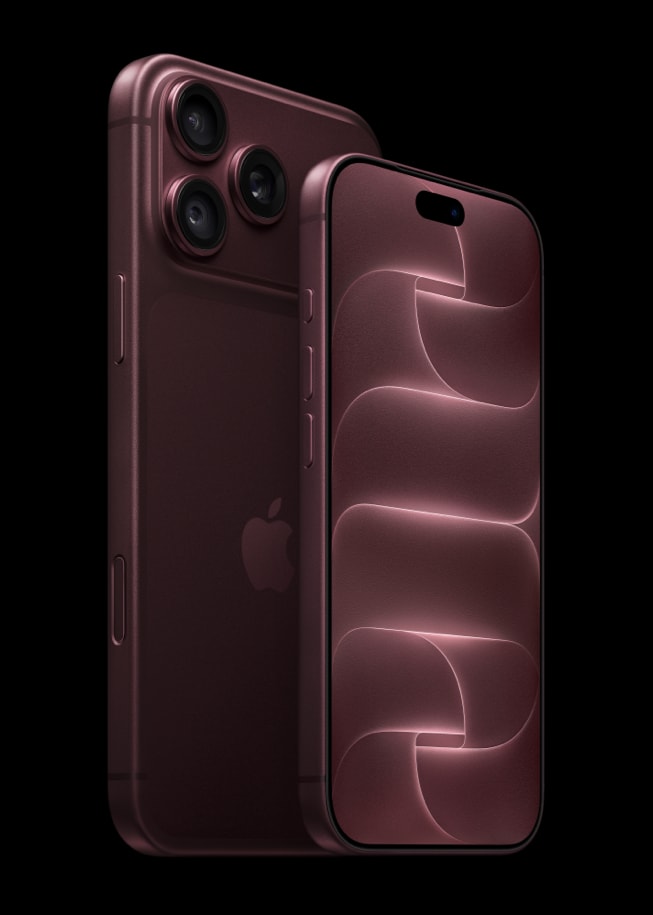
The spec pages list identical height, width and depth for the two generations, and both use an aluminium unibody. From the outside they are hard to tell apart. The visible difference is colour: iPhone 18 Pro comes in Black, Silver, Glacier and Burgundy.
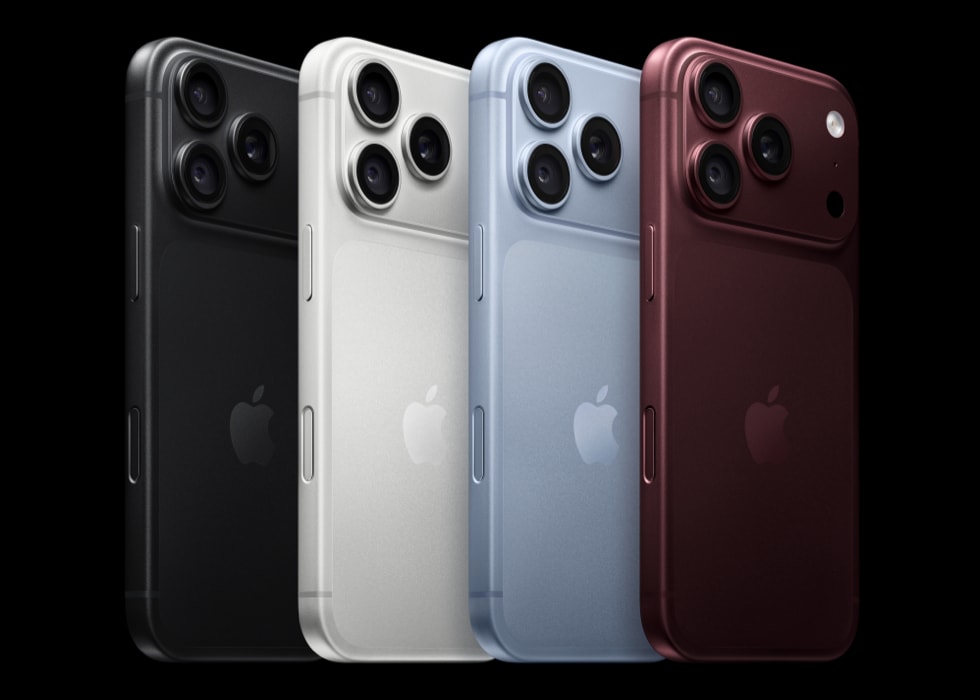
Weight has gone up, by 7 g on Pro and 18 g on Pro Max, which now weighs 249 g. Apple does not say where the extra weight is, but battery life and cooling both improved in the same generation, which points in the same direction.
iPhone 18 Pro is also available with 2TB of storage. In the previous generation only Pro Max offered that.
Cooling and chip packaging: the biggest change
iPhone 17 Pro was the first iPhone with a vapor chamber. Apple's press release at the time said it was laser-welded into the aluminium chassis to move heat away from A19 Pro.
The iPhone 18 Pro press release describes two specific changes:
- The vapor chamber has three times the surface area of the previous one, and uses new materials.
- The chip is packaged differently. A20 Pro places the silicon die side by side with the memory, which takes the memory out of the chip's thermal path and lets the chip attach directly to the vapor chamber. Apple says the packaging is inspired by its M-series chips for Mac.
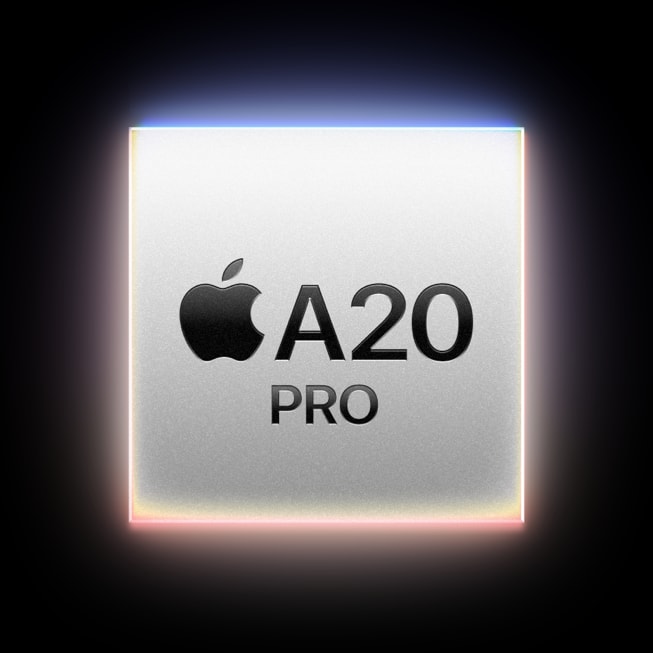
The result Apple gives is up to 40% higher sustained performance, which it calls the highest yet in an iPhone. Sustained performance is what the phone can hold under a long heavy load. It is not the same as the short peak a benchmark measures. How much the phone slows down once it gets warm, in a demanding game or a long video shoot, depends on it.
Performance: nearly 30% higher in both single-core and multi-core
These are Geekbench 7 scores. A19 Pro is the device average for iPhone 17 Pro Max on Geekbench's site. A20 Pro is not in the averages chart yet, so the figure is the median of 25 results uploaded by users on 3 and 4 October 2026.
| Chip | Single-core | Multi-core |
|---|---|---|
| A19 Pro (iPhone 17 Pro Max) | 3167 | 8803 |
| A20 Pro (iPhone 18 Pro series) | 4017 | 11328 |
| Gain | about 27% | about 29% |
Apple's own figures: a GPU up to 40% faster, 50% more memory bandwidth, and a Neural Engine that goes from 16 cores to dual 16-core for double the AI processing power. A20 Pro is Apple's first iPhone chip on a 2-nanometre process. More chips are listed in our benchmark chart (in Chinese).
Battery life and charging
From the official spec pages, for the version with a physical SIM tray:
- iPhone 18 Pro plays video for up to 34 hours, against 31 hours before. Three hours more.
- iPhone 18 Pro Max plays video for up to 43 hours, against 37 hours before. Six hours more. Apple calls it the largest increase in battery life ever on iPhone.
The eSIM-only version, with no SIM tray, has a larger battery and Apple says it adds two more hours. That version is sold in the United States, Canada, Japan and some other regions. Malaysia gets the version with a tray.
For charging, the previous generation reached 50% in 20 minutes. This one takes about 15 minutes and needs a 60W-capable adapter or higher with adjustable voltage. Apple also says five minutes of wired charging on Pro Max gives around seven hours of video playback. Wireless charging is unchanged at 50% in 30 minutes.
Camera: a variable aperture on the Main camera
The camera hardware change in this generation is in the Main camera. The previous Main camera had a fixed ƒ/1.78 aperture. The new one switches between ƒ/1.48, ƒ/1.8, ƒ/2.8 and ƒ/4.0, using six blades.
- Wide open (ƒ/1.48): more light, so brighter shots in dark places.
- Stopped down (ƒ/4.0): more depth of field, so the back row of a group photo is sharp too.

The camera can choose the aperture by itself, or you can set it in the Camera app. We found no change to the Ultra Wide and Telephoto cameras on the two spec pages.
Modem and Dynamic Island
- Modem: iPhone 18 Pro uses C2, Apple's own cellular modem. Apple says it uploads faster than C1X and uses 15% less energy.
- Dynamic Island: Apple says it has been redesigned and is smaller, and it can now show three Live Activities at once. Face ID remains.
- Wireless: both models use Apple's N1 chip, with Wi-Fi 7 and Bluetooth 6.
Claims going around that Apple has not published
There are many more detailed claims online about what changed inside iPhone 18 Pro. A long post by the Weibo writer @有没有搞措 (in Chinese) is one of the more complete collections. We could not find the following in Apple's spec pages or press release. They may come from teardowns, third-party tests or supply-chain reports. They are worth knowing, but they are not official figures:
- Battery capacity in mAh. Apple never publishes it, only hours of use.
- Peak charging power in watts. Apple only says about 15 minutes to 50%.
- How much memory there is and of what type. The spec page does not list memory.
- What materials are used for internal parts such as the mid-plate or behind the display. The press release only says the vapor chamber uses "new materials".
- CPU clock speed. Apple does not publish it. Results uploaded to Geekbench show about 4.93 GHz.
One claim does not match the official figures: the weight gain on Pro is given as 4 g, while Apple's spec pages list 204 g for iPhone 17 Pro and 211 g for iPhone 18 Pro, a difference of 7 g.
Is it worth upgrading
- From iPhone 17 Pro: the shape is the same and everyday use will feel similar. You will notice the gains if you play demanding games, shoot long videos, or found the previous battery life short.
- From iPhone 15 Pro, 16 Pro or earlier: cooling, battery life and charging speed have improved over two generations and the gap is clear.
- If weight matters to you: Pro Max is now 249 g, 18 g more than before. Hold one in a store before deciding.
In Malaysia iPhone 18 Pro starts at RM5,499 and Pro Max at RM5,999. Apple The Exchange TRX currently has most models in stock, and the stock radar shows the live status.
FAQ
Does iPhone 18 Pro look different from iPhone 17 Pro?
The dimensions are identical and both have an aluminium unibody. The differences are colour and weight: iPhone 18 Pro comes in Black, Silver, Glacier and Burgundy and weighs 211 g, 7 g more than iPhone 17 Pro.
How much faster is iPhone 18 Pro than iPhone 17 Pro?
About 27% in Geekbench 7 single-core and about 29% in multi-core. Apple says the GPU is up to 40% faster and sustained performance under long heavy load is up to 40% higher.
How much longer does the iPhone 18 Pro battery last?
By the video playback figures on the official spec pages, Pro goes from 31 to 34 hours and Pro Max from 37 to 43 hours.
How fast does iPhone 18 Pro charge?
About 15 minutes to 50% with a 60W-capable adapter or higher. The previous generation took 20 minutes.
Will an iPhone 17 Pro case fit iPhone 18 Pro?
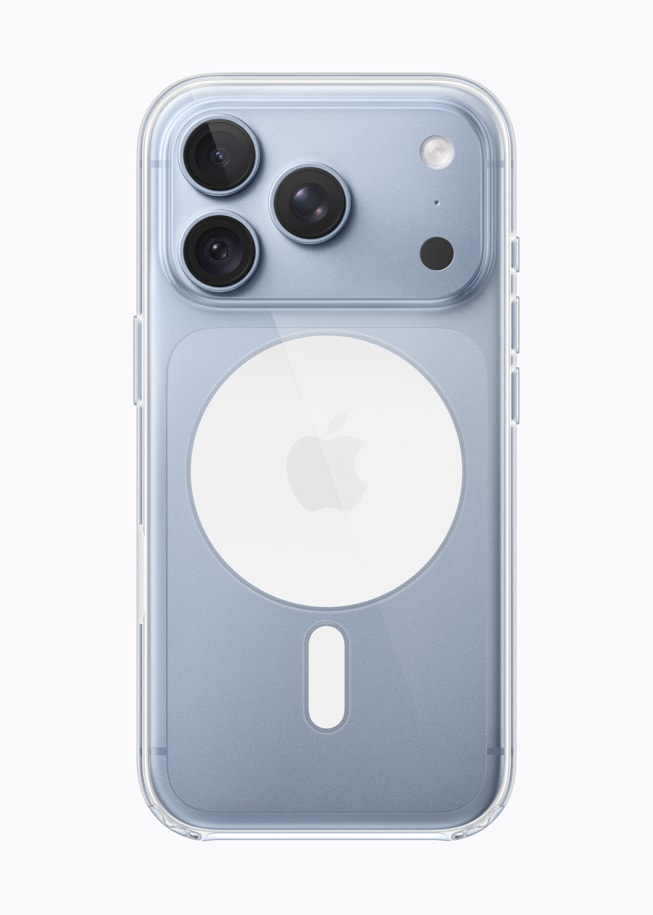
The two bodies have the same height, width and depth, but Apple does not say whether the camera module and button positions are identical. Check the compatibility note of the case before buying.
Read next
- iPhone Duo pre-order guide: Pre-orders open at 8 PM on 16 October, from RM9,499. Regional price comparison and launch-day pickup.
- iPhone 18 Pro Max: Hong Kong vs Malaysia: The 256GB differs by only RM18. SIM, warranty and current stock compared.
- Apple The Exchange TRX restock times: When stock arrives at TRX: one week of restock records, model by model.
This is an independent third-party site with no affiliation with Apple Inc. Specifications are from Apple's tech specs pages and press releases, viewed on 5 October 2026. Benchmark scores are from Geekbench Browser. Product images are Apple's press images. Wording such as "up to" and "about" follows Apple's own statements, and real-world results vary with use.